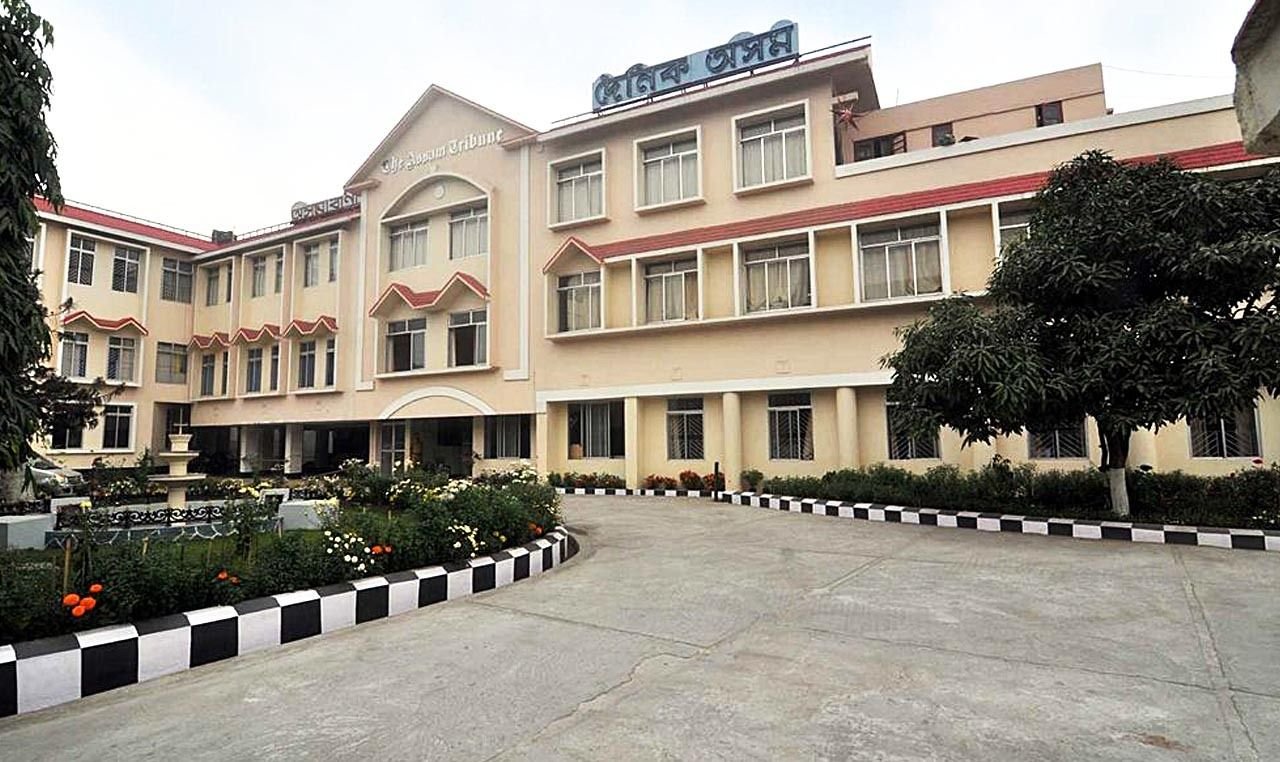
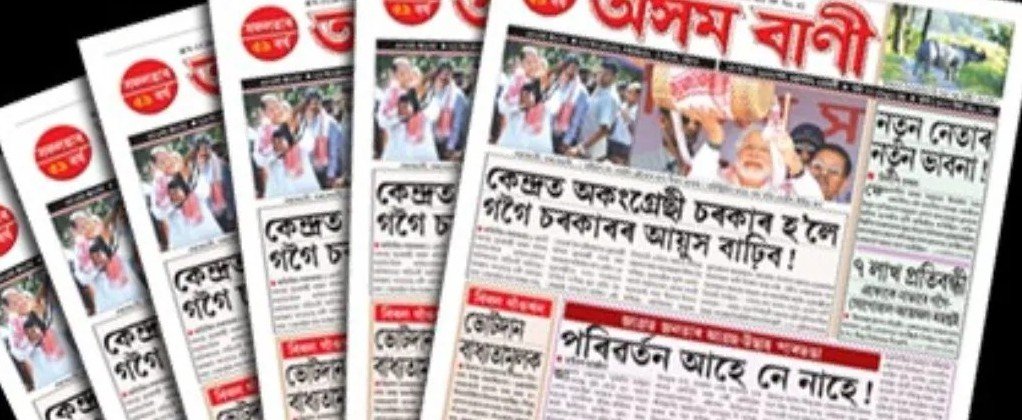
Amid an existential crisis within the Guwahati-based Assam Tribune Group of newspapers—worsened after the Covid-19 pandemic—a popular Assamese weekly from the same house ceased publication in late 2025. Asom Bani, once a leading mainstream weekly for decades, stopped hitting the stands every Friday from September last year.
Before its unceremonious end, the weekly was merged with Dainik Asom, an acclaimed Assamese daily from the prestigious media group, as its Friday supplement. Alongside these two Assamese publications, the group also publishes its flagship English daily, The Assam Tribune.

Once edited by eminent Assamese journalist-authors such as Satish Chandra Kakati, Tilak Hazarika, Phani Talukdar, Nirod Chowdhury, Homen Borgohain, and Chandraprasad Saikia, the weekly had Dilip Chandan as its last editor—who served Asom Bani for nearly three decades.
Launched on 1 July 1955 by legendary Assamese entrepreneur Radha Govinda Baruah, Asom Bani chronicled major socio-political developments, including the Assamese-medium movement, the anti-influx agitation, the rise of separatist insurgency, periods of social unrest, the emergence of regional politics, and its eventual decline—all with a strong commitment to indigenous concerns.
The pandemic severely impacted the circulation of all newspapers under the Assam Tribune group. Shrinking advertisement revenues from commercial entities further deepened the crisis, resulting in irregular salary disbursements to employees, including journalists.
The employees’ union publicly highlighted several issues, including unpaid dues to retired staff. Union leaders alleged that the group hadn’t received significant pending payments from the state directorate of information & public relations for published government advertisements.
Rumors soon circulated about a possible sale of the entire media group to a city-based television house. However, the management of The Assam Tribune Group initially denied the reports, terming them false, which was reported by this author in an article in June 2025. In an official statement, it reaffirmed its commitment to “editorial independence, journalistic integrity, and continued service to readers, advertisers, and stakeholders,” urging all to disregard such “baseless speculation.”
Founded on 4 August 1939 with Lakshminath Phukan as its first editor, The Assam Tribune remains the highest-circulated English daily in the northeastern region.
However, assurances from the management, led by Prafulla Govinda Baruah (the second son of RG Baruah, who passed away on 14 December at age 93), did not prevent it from transferring Dainik Asom—a six-decade-old publication—to a different media group.
The buyer, young entrepreneur Kishor Borah, owns the Assamese satellite channel ND24. The deal, made public on 17 September last year, handed over Dainik Asom to the new management, which chose not to continue Asom Bani as a supplement. As a result, the weekly appeared for the last time on 12 September 2025.
The new management did not retain all employees, and on 18 September, over 70 staff members—including several on extended tenures—are said to have lost their jobs.
Although the management promised to settle all legal dues within weeks, payments allegedly remain pending. The affected employees have approached the labor court to recover their dues, reportedly amounting to around six crore rupees. It is ironic that the media house—once the first in India to implement the Majithia Wage Board recommendations in 2010—now faces allegations of evading payments to its own staff.
Once known for credibility, the Tribune group faces criticism for compromising journalistic integrity over various issues. It also faces one of its most serious financial and ethical challenges—one exacerbated not only by the pandemic but also by internal and managerial issues. Once a bastion of principled journalism, the house now finds itself struggling to uphold the very standards that built its legacy.
(The views expressed in the article are personal)