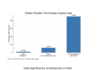
The Mint on 18 May 2016 carried an excellent article on managing human capital risks effectively by Vivek Nath and Urvi Shriram of Wills Tower Watson, a global advisory, broking and solutions company. The article cites research by the company in collaboration with the Confederation of Indian Industry, “Paradoxically, for a country where organisations have limited human capital risk mitigation strategies, the study found that human capital risks ranks first among 12 risks in terms of business performance, highlighting the need to manage these as rigorously as other enterprise risks. Further, 62% respondents identified human capital risks as a significant board-level concern, yet, only one in three have a formally defined risk mitigation or control strategy in place.
Fortunately in our industry (particularly in the newspaper and packaging segments) Isee investments in human capital and occasionally, serious strategies to mitigate risk by addressing concerns such as insufficient leadership bench strength, retention of critical talent segments, capability gaps, low workforce productivity and inadequate talent attraction programs. At the same time, I see some of our most experienced and talented technical personnel fleeing even the largest companies for what they perceive are better opportunities in Africa.

Some of the reasons for our mismanagement of human capital may be systemic or cultural – change may require the evolutionary development of the overall ecosystem including employer and employee attitudes. My observation is that overall, Indian employers are neither different nor better than their employees. There is a remarkable similarity in outlook and in spite of awards and recognition programs, there are very few role models to emulate, especially for their investments in human capital.
The time to act is now
Nath and Shriram write, “A coordinated and formal risk management process is more crucial than ever before.” If human capital is your biggest asset what are you doing about it? My answer is of course a sales pitch. I cannot help you lose a few kilos by signing up for a subscription (although this is possible along with an improvement in your golf score).
What I can do is bring to your attention again, a structured and formal way to educate your human capital in color management and print standardization by signing up to become an Idealliance India member and to then educate your technical talent either online or by sending them to the 4-day G7 Expert and Professional training program by Steve Smiley in Mumbai from 20 to 23 September. Companies that can afford to train and retain trained talent will also attract the best talent. Obviously this is not a remedy for the faint-hearted, but for those who want to leverage technology with human capital.
The third reason
In a recent visit to the Aptec centre in Hong Kong, the head of Idealliance China Brenda Peng explained why Chinese printers become members of Idealliance and why they train their employees as G7 professionals and experts and go on to qualify their plants as G7 Masters. “First of all it is because their customers (brand owners and print buyers) demand it; secondly it is because they want to become print and packaging exporters and this is a qualification that is globally recognized and in demand. Thirdly, they do this because its the right thing to do – this is a practical path to talent enrichment, to standardization and printing by numbersto achieve excellence in quality and reduce wastage. Not many print owners even know what their real wastages are.”
I am hoping that the top 50 printing and packaging organizations in India will take part in this first 4-day G7 Expert training and certification program. If you are interested talk to me or email me. From 29 May to 9 June I will be at drupa. You can call my cell number or join the Team India at drupa WhatsApp group send a message to Krishanu +91- 8826596502 or my cell number given below.