As online and paperless ticketing gets more and more popular, the curtains are finally down on a piece of India’s heritage — one of India’s oldest printing press networks owned and operated by the Indian Railways since the 19th century.
Though the closure had been impending for quite some time amid the digital push, five of a total of 17 presses — some from the pre-Independence era — had managed to stay afloat. But now even those have been ordered to be shut down in a latest railway ministry order dated 3 May 2023. The Indian Printer & Publisher had in 2018 reported on the possible closure of one such heritage press in Mumbai.

The proposal to close down all 17 printing presses owned by the Indian Railways first found mention in the Rakesh Mohan Committee Report in the year 2001. The idea was formally introduced in 2017 by the railway ministry during a meeting that took place after the tragic stampede at Mumbai’s Elphinstone Road railway station in September 2017. Following the incident, a high-level meeting was called by then railway minister Piyush Goyal, wherein the chairman and other railway officials took several other significant decisions, including the closure of the printing presses.
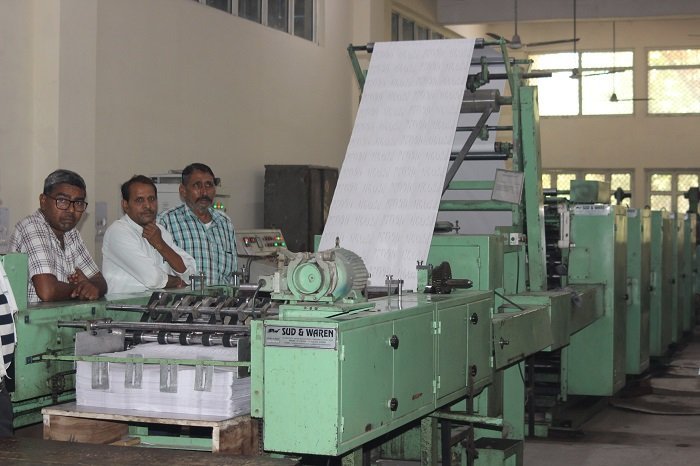
The railway ministry considers these presses ‘unproductive ventures,’ even though they have for years printed crores of railway tickets and other documents such as time tables, receipts, maps, time tables and books before the onset of computers. These days, ticketing has mostly moved online due to paperless ticketing promoted by the Indian railways.
With digitization and automation, these ’19th century units’ are being shut down with the printing of passenger reservation system (PRS) and unreserved ticketing system (UTS) tickets, privilege ticket order and privilege passes being outsourced to third-party vendors comprising security printers approved by the Reserve Bank of India.
The Bibek Debroy Committee set up in 2014 laid stress on the fact that the Indian Railways should concentrate on its core service, which is running trains. The committee had recommended that the closure of the printing presses was for the purpose of ‘liberalization, not privatization.’
In the 3 May 2023 order, the railway board under the ministry of railways, Government of India ordered the closure of the last five printing presses located at Byculla in Mumbai (Central Railway), Howrah (Eastern Railway), Shakur Basti in Delhi (Northern Railway), Royapuram in Chennai (Southern Railway), and Secunderabad (South Central Railway).
The Indian Printer & Publisher had in an article dated 21 September 2018 had reported how the central railways’ iconic printing press in Byculla was set to be shut down. Established in 1895 as a hub of printing projects for the Great Indian Peninsula Railways, the press printed everything from tickets to railway stationery.
With machines dating to 1927, the Railway Printing Press at Royapuram, which started operations back in 1891, was used to print cardboard tickets utilized by the passengers of Southern Railway. With the adoption of a computerized ticketing system in the year 2000, the Indian Railways made its move towards digitalization and started phasing out its printing machines. Another media report said the Secunderabad press was established by the Nizams in 1879 and taken over by the government in 1950.
According to the latest order signed by Gaurav Kumar, director, RS (F), all machines, and plants available in these presses should be disposed of by the Zonal Railway concerned in a manner so as to derive maximum value for money and the released staff are to be re-deployed suitably while the land released should be gainfully utilized.
There is, however, a feeling within a section of the employees that the shutdown and switchover to digital should have been a gradual process until complete digitization happened. The printing jobs that have been outsourced to private vendors are not being done with complete accuracy and come back with errors, some railway staff claimed on condition of anonymity – raising a question mark on the reliability of these private printers. While digitization is the way forward to an online ticketing system, they feel there should be a back-up in case of any snag.
The presses used to employ highly trained staff from regional institutes of printing technology in Kolkata, Chennai, Pune and Allahabad, printing diploma-holders from Pusa Polytechnic and print engineering degree holders from Annamalai University.
With the government closing down its presses in the Indian Railways, another question arises – if the doors of the government sector are being closed to printing professionals in India. Now, such highly trained professionals in the printing field would have to look for avenues in the private printing sector.
Senior railway ministry officials could not be reached for an official comment despite repeated requests.