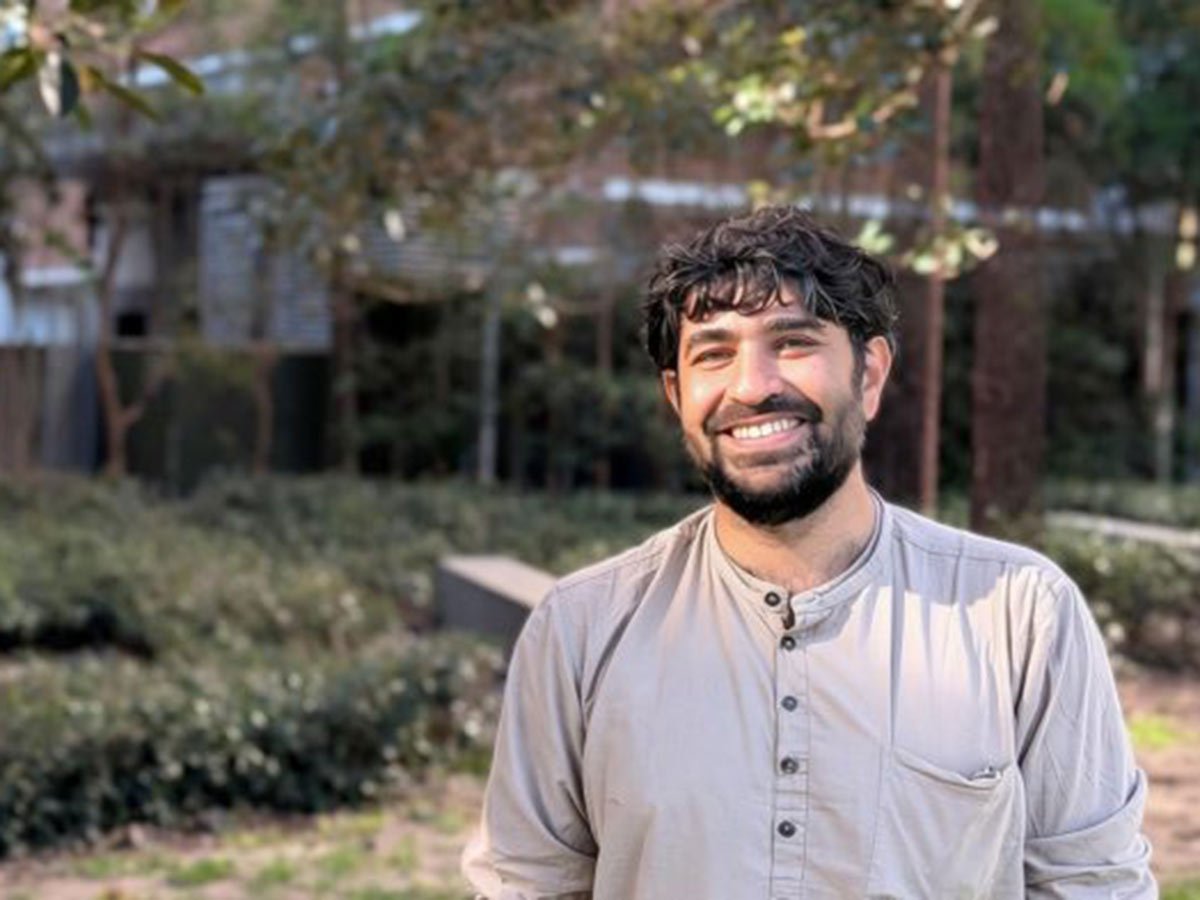
Gautam Bhatia, NIF Round 8 Fellow, has been awarded the Infosys Prize 2026 in Humanities and Social Sciences.
Bhatia’s book The Transformative Constitution, written with the support of his NIF Fellowship, along with the rest of his work, reflects a sustained commitment to making law a lens through which to envision a more humane world.
The Prize citation says of Bhatia, “No other legal scholar in the Indian academy today has worked with such ceaseless passion and such energy and brilliance to criticize and improve upon the frameworks that define and frame the law in our country today.”
“Prof. Bhatia is an outstanding young legal scholar, prodigiously productive, tremendously wide in his range of knowledge and interests, with a real gift for marshalling arguments rigorously towards conclusions that seek to make the law an instrument for constructing a fair, equal, and humane society. His five books and many academic articles amount to a formidable corpus of important work, fully deserving of the prestige bestowed by the Infosys Prize,” the prize website stated.
Bhatia’s work in the study of the law is a model of rigorous argument drawing on a variety of ideas in a rich literature in legal thought, political theory, and moral philosophy, which he has mastered in great detail, it stated..
Gautam Bhatia went to Balliol College as a Rhodes Scholar after obtaining a bachelor’s degree in the arts and in the law from the National Law School of India University in Bengaluru. After acquiring his second bachelor’s degree in law from Oxford, he proceeded to Yale University for a master’s degree and then returned to Oxford to acquire a doctoral degree.
Author of five books on Indian Law and the Indian Constitution, he has written extensively on constitutional law in other parts of the world. He is currently an adjunct professor at the Jindal Global Law School and a practicing lawyer in New Delhi.
“My warmest congratulations to Gautam Bhatia on being awarded the Infosys Prize 2026 in Humanities and Social Sciences for his outstanding and prolific contributions to the theoretical construction of possibilities for revising and improving the legal and constitutional frameworks in India so as to provide a basis for a more humane and equitable society,” said Akeel Bilgrami, jury chair, Humanities and Social Sciences.