When print businesses evaluate a new computer-to-plate (CtP) system, the first question is often, “How much does it cost?” In a price sensitive industry, that concern is understandable. Yet the quotation is only one part of an investment expected to perform for years. Operating cost, reliability, uptime, consistency, service support and productivity ultimately determine its value.
Kodak India explored this issue in its recent webinar, ‘Beyond the Price Tag: Making Smarter CTP Investment Decisions.’ The session showed how printers can assess total cost of ownership (TCO) across maintenance, energy, consumables, downtime, scalability and future readiness, rather than comparing equipment on upfront cost alone.

Why the cheapest option can cost more
The real cost of a CtP goes beyond the equipment cost. A lower purchase price can appear attractive, but frequent intervention, operator dependence or breakdowns can quickly erase the saving. Every stoppage affects the production chain: presses wait, schedules tighten and customer commitments come under pressure.
Today’s print applications demand finer screening, tighter color control and repeatable plate quality. Meeting these requirements consistently depends on imaging technology that can minimize variation and rework. One example is Kodak Squarespot Imaging Technology, which uses autofocus, temperature compensation and geometric correction to support high-resolution thermal imaging in demanding commercial, security and lenticular applications.
The energy costs that add up over time
Energy efficiency is another important factor in operating cost because power use also affects cooling load. For multi-shift operations, small differences can accumulate significantly over the equipment’s life. In the webinar, Kodak has highlighted power-saving advantages for its Veriset and Trendsetter Platesetters; printers should therefore consider energy consumed per productive plate, not only rated power.
Automation and scalability help protect productivity as running lengths, plate formats, shifts and volumes change. Kodak’s portfolio includes automatic and multi-pallet loading, robotics, higher plate throughput, remote monitoring and upgrade paths. The right level depends on each operation: a high-volume business may prioritize throughput, while a smaller printer may value flexibility, reliability and ease of use.
Why the wider prepress ecosystem matters
The wider prepress ecosystem also matters as workflow, plates, imaging, automation and technical support must work together. Kodak’s connected offering brings together CtP systems, Prinergy workflow, Sonora process-free plates and thermal plates, supported by trained service experts in India. When issues arise, faster root-cause identification across the production environment can help protect output continuity.
Long-term performance is an important part of the investment equation. Narendra Paruchuri, CEO of Pragati Offset, has highlighted the reliable performance delivered by the company’s first Kodak CtP.
Kartik from Kala Jyothi Process has highlighted the value of Squarespot Technology through consistent quality, faster turnaround, operational efficiency and sustainable printing.
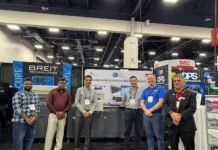
“The webinar was hugely successful because it addressed a question that matters to every printer: how to make an investment decision that continues to deliver value long after installation. The strong engagement showed that customers are looking beyond initial price to performance, consistency, service support and total cost of ownership,” said Bhalchandra Nikumb, sales director, Kodak India.
For Indian printers, the takeaway is clear: a sound CtP investment should be judged by the value delivered throughout its working life. Longevity, consistent performance, service support and operating cost all deserve consideration alongside the initial purchase price.
Five questions to ask before investing
Volume and growth: Match the system to current plate demand and expected growth over 5–10 years.
Reliability: Assess how much downtime the business can afford during peak production.
Local support: Review response times, trained engineers, spare parts and preventive maintenance.
Total Cost of Ownership: Include maintenance, energy, consumables, operators and life-cycle costs.
Future readiness: Confirm compatibility with workflow, plates, automation and upgrade paths.